
When a clogged drain is an emergency
A single slow sink can wait for a daytime appointment. Sewage coming up through a floor drain, a tub that fills when the washing machine drains or a toilet that overflows when you flush are emergencies. Treat them as one, and call the 24/7 line at any hour.
Until the plumber arrives, these steps limit the damage.
Stop the water
Do not run sinks, showers, dishwashers or washing machines. Every gallon adds to the backup.
Skip the chemicals
Drain openers can burn skin and make the clog harder to clear safely. Tell the plumber if you used one.
Check the pattern
If only one fixture is slow, the clog is local. If a tub gurgles when you flush, the main line is the problem.
Protect the floor
Move rugs and boxes away from basement floor drains and put towels at the door of the wet room.
Why drains clog in Revere buildings
Most Revere homes were built before 1960, and the largest share before 1940. Drains from that era are often cast iron, which roughens inside over decades and catches grease and paper. A rough pipe wall clogs faster than a smooth one, even when you use the drain correctly.
Many buildings are two-families or small apartment houses, with a shared vertical stack. A blockage low in a stack can back up into the first-floor unit while the third floor drains normally. That is why we ask which floor the water appears on before we pick a tool.
Kitchen grease is the other usual cause. It cools in the line and builds up in layers, especially in older apartments where the kitchen drain runs a long way to the stack.
Four signs a drain needs professional cleaning
Slow in more than one place
A sink and a shower that both drain slowly point to a shared branch or the main line, not a hair clog.
Gurgling and air bubbles
Air pulled through a trap means water is struggling to move in the pipe behind it.
Smell from a floor drain
A sewer smell in a basement drain usually means standing water or a partial blockage downstream.
The clog keeps coming back
A drain that clears for a week and slows again has a cause a cable alone has not removed.
Which tool fits which drain problem
The plumber picks the tool after looking at the fixture, the pipe size and how the clog behaves. This table shows the usual match.
| What you see | Likely cause | Usual fix |
|---|---|---|
| One sink slow or stopped | Hair, soap or food in the trap or branch | Hand auger or small cable machine |
| Kitchen line slow, greasy smell | Grease layers in a long horizontal run | Cable with cutting head, then a hot water flush |
| Toilet and tub both back up | Blockage in the main or branch line | Large cable machine, camera if it repeats |
| Backups return every few months | Scale, roots or a damaged section | Hydro jetting after a camera check |
Tool choice is a general guide. A plumber confirms the cause on site before work starts.
What a drain cleaning visit involves
Most visits finish in a single trip. The plumber works in this order.
Locate the blockage
The plumber runs water, listens and checks cleanouts to learn how far down the clog sits.
Cable the line
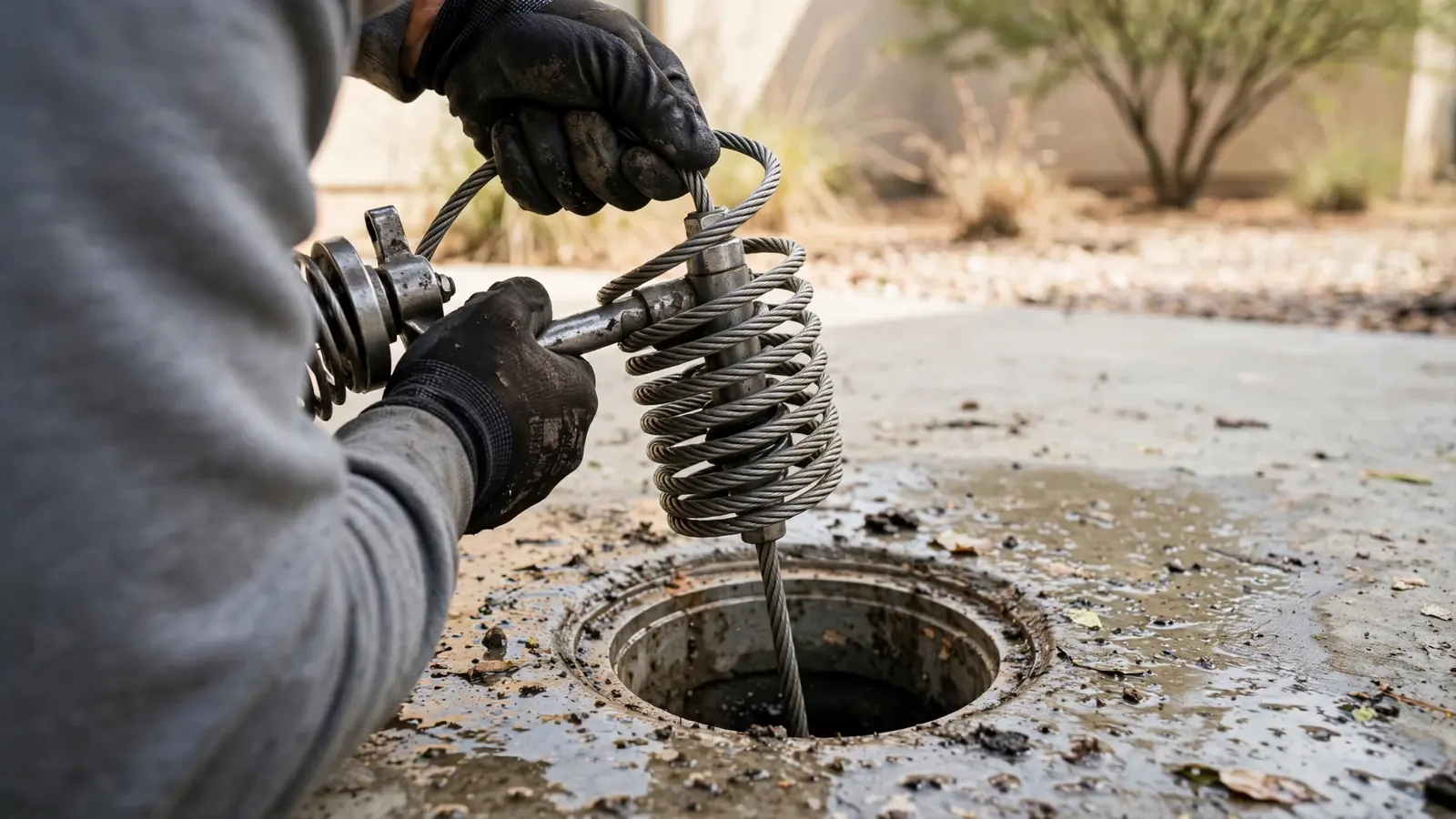
A drain machine feeds a cable through the pipe and cuts or hooks the clog loose.
Flush and test
Water runs through every affected fixture to confirm the line drains at full speed.
Advise on repeats
If the cable pulled back roots, scale or broken pipe, the plumber recommends a camera inspection.
Water still rising?
The 24/7 line is answered every hour of the day.
What affects the cost of drain cleaning
Drain cleaning has no flat price because the work varies from a five-minute hair clog to a main line that needs a machine and a camera. You hear the number before work starts, after the plumber has seen the problem.
Homeowners insurance usually covers sudden water damage but often excludes sewer or drain backup unless you added a backup endorsement. Check your policy, and keep photos and the plumber's invoice.
When the blockage may be in the city sewer
Revere's Water and Sewer Department is responsible for the public sewer main. You are responsible for the lateral that runs from the main to your house. If a plumber clears your line and the water still backs up, or neighbors report the same problem, the cause may be the main.
In that case call the city's 311 line at 781-286-8311. According to the EPA, a 2010 federal consent decree cited more than 722 sewer blockages or capacity limits in Revere since January 2000 that caused basement backups, and the city has worked on drainage since then. Your plumber can document that your lateral is clear, which helps when you report the problem.
If your building is a shared one near Shirley Avenue, the neighborhood page explains how a clog travels between units.
Common questions
Do you handle drain emergencies at night or on weekends in Revere?
Yes. The line is answered 24 hours a day, including weekends and holidays. A dispatcher sends a licensed plumber as soon as one is available and tells you what to do while you wait.
Can I use a chemical drain opener first?
We advise against it. Chemicals can injure skin and sit in standing water, which is unsafe for the plumber. Cable and jetting clear the clog without chemicals.
How do I know whether it is my line or the city sewer?
If only your building backs up, the problem is usually your lateral. If neighbors also have trouble, call Revere 311 at 781-286-8311 and tell your plumber.
Do you clear kitchen sink clogs and floor drains too?
Yes. Kitchen lines, bathroom branches, basement floor drains and washing machine standpipes are all part of drain cleaning.
Will drain cleaning damage old cast iron pipes?
A careful cable job should not. If a camera shows thin or cracked pipe, the plumber will explain the risk before using a stronger tool.
Why does my drain clog again right after cleaning?
Usually the cable opened a path through grease, roots or scale that is still on the pipe wall. A camera and jetting address the cause.