
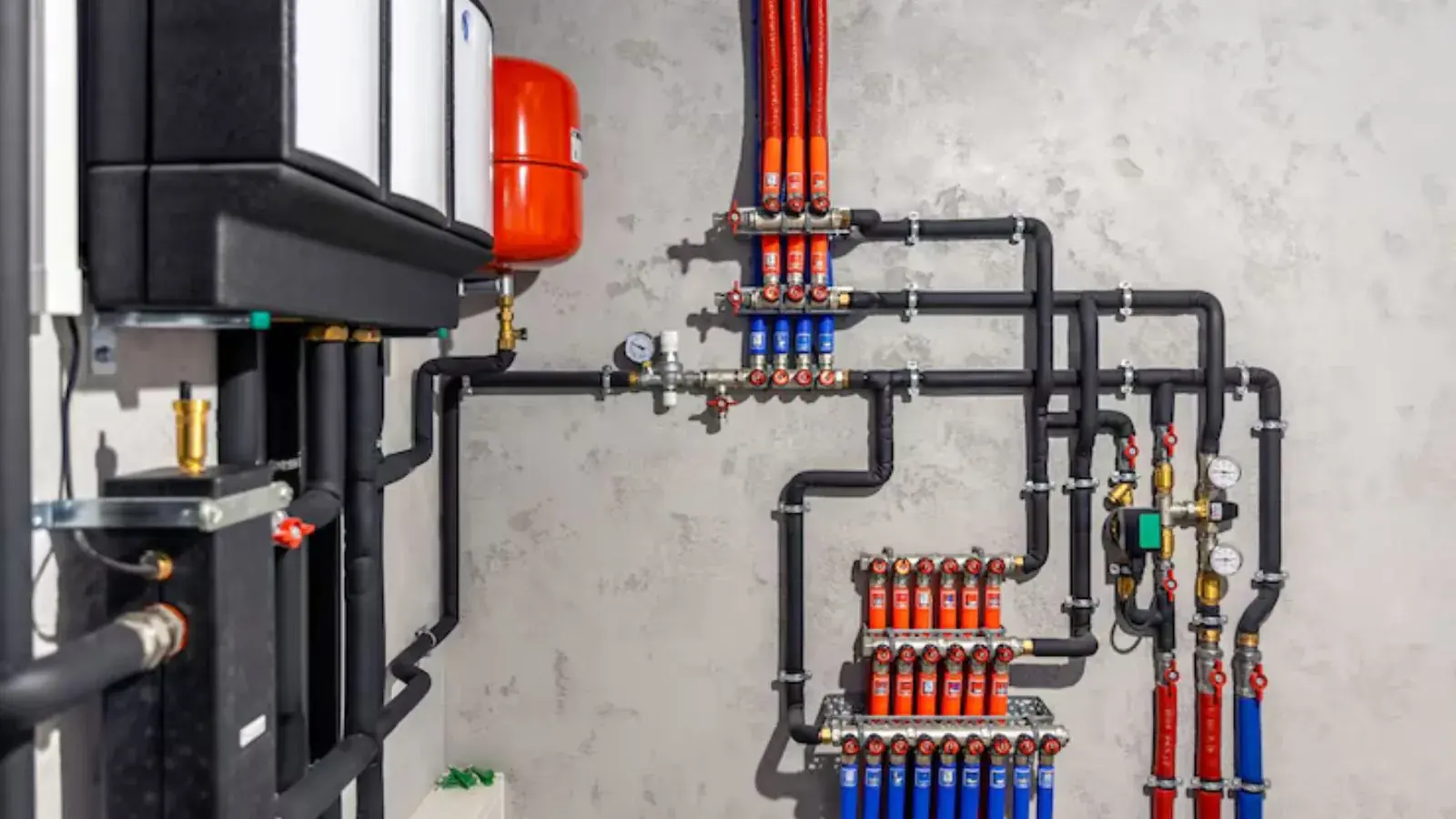
No heat: what usually fails in a boiler system
Most no-heat calls come down to a short list. The thermostat or aquastat has failed, the circulator pump has stopped, the burner will not ignite, the system has lost pressure or air has trapped in the lines. A plumber works through these in order and tests the safety controls.
Older buildings add other causes. Zone valves stick, expansion tanks fail and old radiators leak at the valves. If the boiler cycles on and off every minute, the cause may be a stuck valve or a poorly set control, and that deserves a technician.
What to check before you call about no heat
Thermostat and power
Check the thermostat is set above room temperature and the boiler switch is on.
Pressure gauge
Note the reading. Very low pressure points to a leak or a failed fill valve.
Visible water
Look for a puddle near the boiler or a dripping radiator valve.
Gas or smoke smell
Leave the building and call 911 or National Grid. Do not relight the boiler.
Heating problems and the likely repair
| Symptom | Likely cause | Repair |
|---|---|---|
| Boiler runs but no heat upstairs | Air in the lines or stuck zone valve | Bleed the radiators, replace the valve |
| Banging pipes | Air or water hammer | Bleed air, check supports and pressure |
| Dripping pressure relief valve | High pressure or a failed expansion tank | Test and replace the tank or valve |
| Cold radiators in one room | Closed valve or air lock | Open valve, bleed air |
| Boiler shuts down by itself | Safety control or flame sensor fault | Diagnose and replace the part |
Heating systems in older Revere buildings
According to Revere's housing plan, most homes were built before 1960 and the largest number before 1940. Many of those buildings still use hot water baseboards or radiators, and some use steam. These systems last a long time when they are maintained, and a boiler with a new burner can carry on for years.
In a two-family or triple-decker, several units may share a boiler. A tenant who loses heat should tell the landlord right away and in writing. The State Sanitary Code, Chapter II (105 CMR 410.000), sets minimum standards for rental housing, and the local board of health can answer questions about heat.
Cold apartment and no heat?
Call the 24/7 line to book a plumber.
Who may work on your boiler
Gas boiler work needs a licensed plumber or gas fitter, and the Revere Building Division issues plumbing and gas permits only to licensed professionals. Oil burner work uses a separate state certificate from a plumbing license, so ask which license covers your boiler type before you hire anyone.
Install a carbon monoxide detector near sleeping areas and test it each season. A boiler with a blocked vent or a cracked heat exchanger can release carbon monoxide, and a detector is the early warning.
What affects boiler repair cost
A thermostat fix and a new circulator are different jobs. The plumber diagnoses first and gives a clear price before work starts.
Insurers often cover sudden damage from a burst heating pipe but not the cost of a worn boiler. Keep invoices and photos.
Common questions
Do you work on gas boilers and oil boilers?
We work on gas boilers with licensed plumbers and gas fitters. Oil burner work needs a separate state certificate, so ask when you call.
Why is my boiler pressure low?
A leak, a failed fill valve or a faulty expansion tank can cause it. A plumber checks and corrects the cause.
Why are my radiators cold at the top?
Air trapped in the radiator is the usual cause. Bleeding it often fixes the problem.
Should I repair or replace an old boiler?
A plumber compares the repair price with replacement, considering age, efficiency and safety. Ask Mass Save whether any heating rebates apply.
Is a boiler repair an emergency?
No heat in winter or a gas smell is urgent. Call the 24/7 line and follow gas safety steps first.
How often should a boiler be serviced?
Many makers recommend annual service. A yearly check catches worn parts before a cold night.